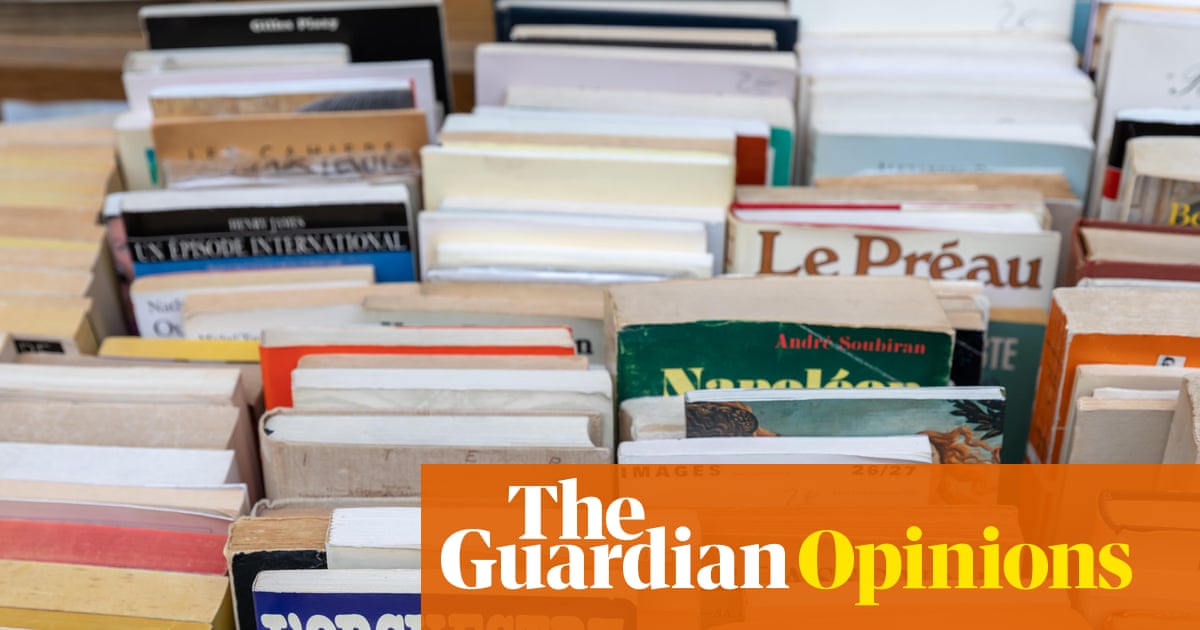
"In my neighbourhood bookshop, La Galerne, the shelves are well organised. On the ground floor, there's a corner for foreign literature and another for French literature, with the latest releases right at the front. For nonfiction and essays, you used to have to go downstairs. But two years ago, they put a new table in front of the French literature corner for feminist essays and memoirs. A prime spot for people to grab a piece of the revolution without thinking about it too much."
"This change took a wild turn when local genius Annie Ernaux won the Nobel prize in 2022. Where should we put her work: in the crowded space for new French literature or the feminist memoir table? This dilemma is now a regular question in France. The Anglosphere and other European countries have been wrestling with it over the past two decades, but here the line between fiction and nonfiction has only just begun to vanish in the minds of authors and their editors."
La Galerne rearranged its ground-floor layout, adding a prominent table for feminist essays and memoirs in front of the French literature corner. Annie Ernaux's 2022 Nobel intensified uncertainty about shelving works that straddle fiction and nonfiction. Bookstores and editors face questions about whether autofiction and personal nonfiction belong among new French literature or require separate displays. Authors such as Edouard Louis, Christine Angot, Alice Coffin, and Adele Yon produce works that dissolve genre boundaries. In 2025, 484 new novels appeared in France, many centered on matriarchal figures, including books by Amelie Nothomb, Emmanuel Carrere, Raphael Enthoven, and Matthieu Niango.
Read at www.theguardian.com
Unable to calculate read time
Collection
[
|
...
]