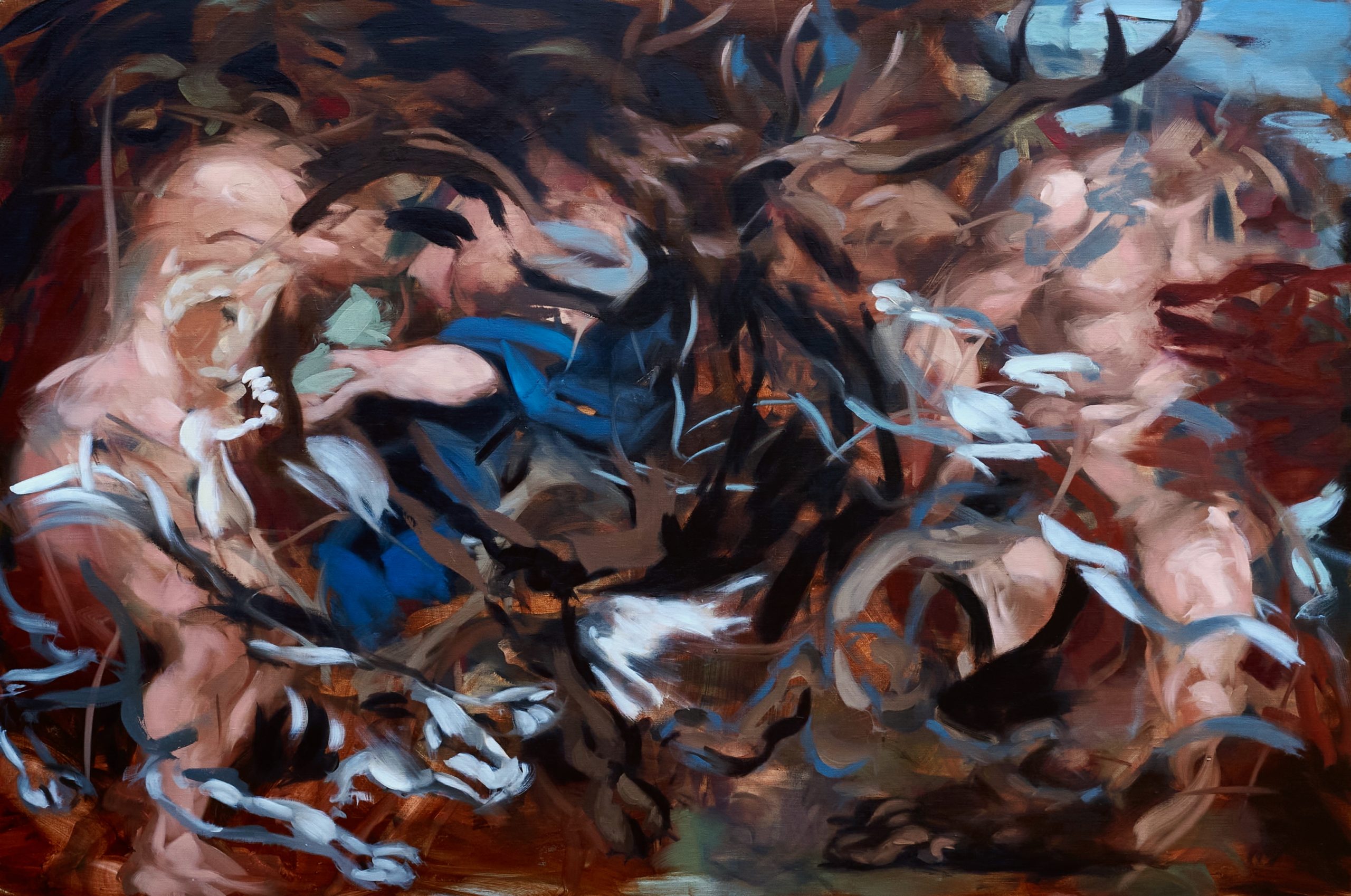
"Artists have always recycled their era's "Old Masters": Romans quoted the Greeks, Rodin studied Michelangelo, and Picasso returned to Rembrandt, to name just a few. While the prevalence of these relationships has ebbed and flowed over time, it is peaking again this winter. A striking number of gallery, foundation, and museum shows in New York are foregrounding emerging and established contemporary artists' interplay with European art history, from Donatello to Goya, with press materials that underscore this lineage almost as strongly as the work itself."
"Brunet's exhibition at Plato (through March 6) features Northern Renaissance-inspired paintings of neo-rural characters inspired by villagers in Stanstead, a U.S.-Canada border town in Quebec where he currently resides. The resulting works filter the austerity of Hans Memling and Holbein through a contemporary lens, rethinking the history of farm work and the accompanying urban fetishization of pastoral life. Brunet previously worked for a small arts-material manufacturer (Kama Pigments) and uses its paint exclusively."
"It's tempting to write off these examples as just more " reference-baiting," a form of art historical name-dropping meant to lend gravity and market confidence to lesser-known artists. But conversations with the gallerists, foundation executives, and artists behind this season's shows reveal that several of the citations are much more than a veneer. To walk the aisles of an art supply store is to be greeted by fragments of art history, from Canaletto paper and Isabey brushes to Van Gogh and Holbein paint."
New York galleries, foundations, and museums are emphasizing contemporary artists' dialogues with European art history, from Donatello to Goya. Some exhibitions use historical citations superficially as market signaling, while many artists pursue substantive engagements with past techniques and materials. Émile Brunet and Eleanor Johnson update material inheritance through specific pigments, tools, and historical visual languages. Brunet's Northern Renaissance–influenced paintings of neo-rural figures translate Hans Memling and Holbein austerity into contemporary reflections on farm labor and urban fetishization of pastoral life. Artists cite interests in alchemy, chemistry, and traditional materials as integral to their visual practices.
Read at Artnet News
Unable to calculate read time
Collection
[
|
...
]