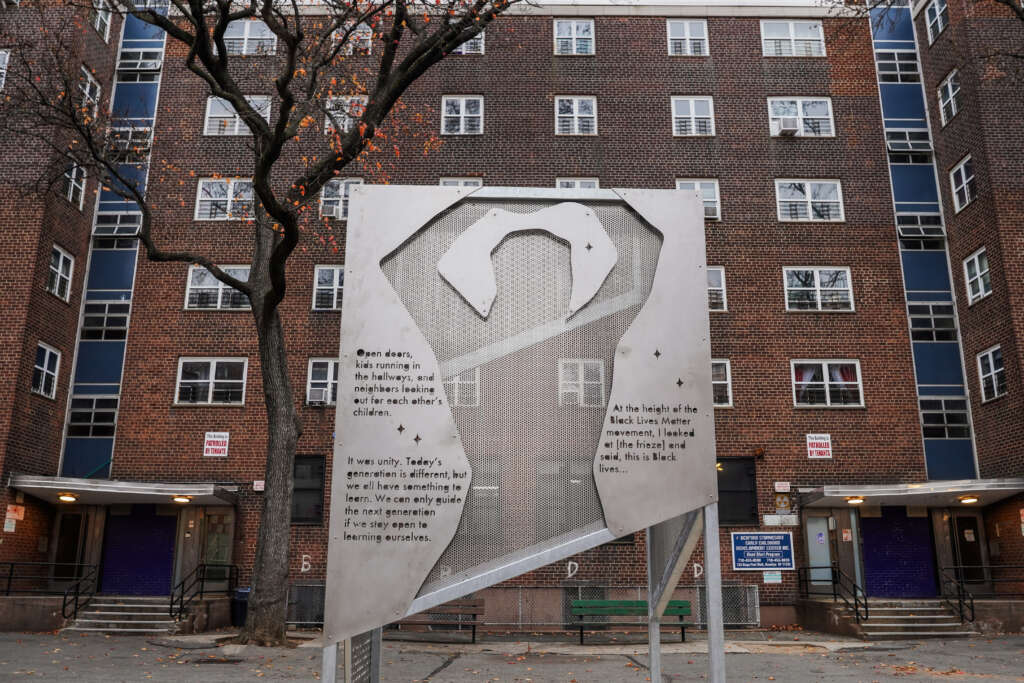
Public art expanded across New York City in the late 20th century, supported partly by the Percent for Art law that allocates 1 percent of eligible city-funded construction budgets to public art. Public art became expected in civic spaces. Earlier, the New Deal’s Works Progress Administration helped shape public art, and Mayor Fiorello LaGuardia promoted installations in places including public housing. After the WPA ended, support continued through affluent patrons and cultural institutions for a time. Despite these investments, NYCHA residents still have to fight for cultural programming, and Percent for Art funding does not adequately reach public housing. Public housing planners once aimed to improve daily life through open space, light, air, dignity, order, civic pride, and art, so residents could share the same joy as well-off New Yorkers.
"Public housing residents deserve art that honors their history and tells the stories of their communities, and the tools to make that happen already exist."
"Despite the trend of investment through WPA and Percent for Art regulations, New York City Housing Authority (NYCHA) residents across the city have to fight for cultural programming, such as the public art enjoyed by residents of neighboring communities. The Percent for Art program falls short in public housing, and it's time for that dichotomy to end and for NYCHA campuses to host works of art that honor the stories, histories, and dreams of the communities that call public housing home."
"That isn't how it's always been. The planners of public housing believed they could take a well-rounded approach to improving daily life, taking into consideration things like open space, light and air, but also dignity, order, and civic pride, and art fit squarely into that framework. Basically, if well-off New Yorkers could enjoy art, residents of newly created public housing should experience that same joy."
Read at City Limits
Unable to calculate read time
Collection
[
|
...
]