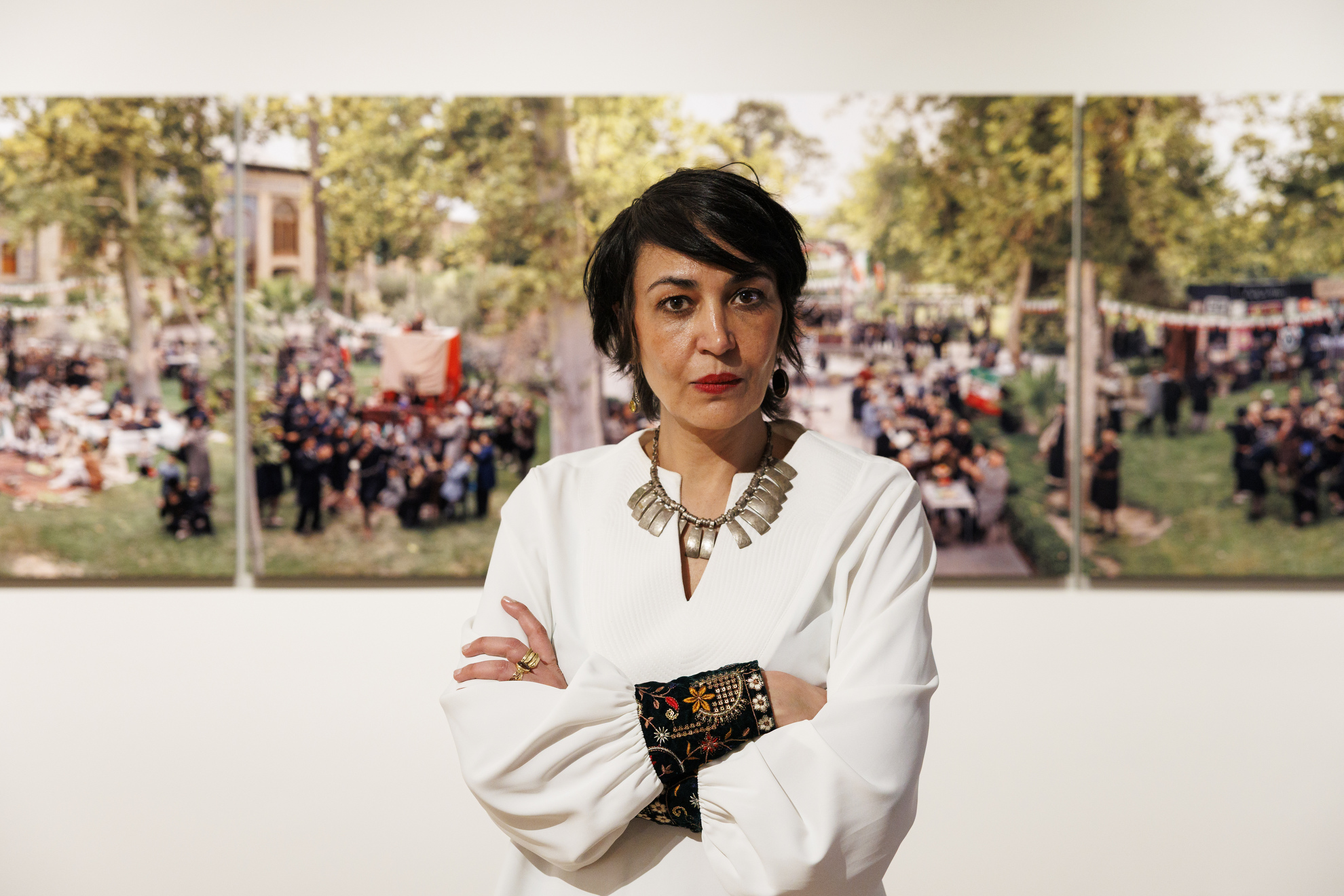
Azadeh Akhlaghi created staged panoramic photographs that recreate 11 pivotal incidents in Iranian history from 1908 through the 1979 Islamic Revolution. Her process draws on archival research, interviews, and her background in cinema to build large-scale images, including one spanning 3 feet by 15 feet. While researching, she encountered contradictions across records and self-censorship in interviews, and she sought documents from the Shah’s secret police that the government would not release. She concluded that complete truth cannot be fully recovered. The exhibit “From Iran: A Visual Testimony” opened at the Peabody Museum of Archaeology and Ethnology and runs through March 21.
"“I found so many contradictions in the records. In interviews, people censor themselves. There are historical documents from the secret police of the Shah that even now the government wouldn't give me,” Akhlaghi said. “You can never really find the truth.”"
"“From Iran: A Visual Testimony,” opened early this month at the Peabody Museum of Archaeology & Ethnology and runs through March 21. The staged photographs cover a period from 1908, when the Russian-led Cossack Brigade bombarded Iran's parliament during the Constitutional Revolution, to the Islamic Revolution of 1979. Drawing from archival research, interviews, and her background in cinema, Akhlaghi recreated 11 incidents from Iranian's tumultuous 20th-century history at a panoramic scale - the largest of the images spans 3 feet by 15 feet."
"Akhlaghi was the 2019 recipient of the Peabody Museum's Robert Gardner Fellowship in Photography, which supports an established photographic practitioner producing a major project “on the human condition anywhere in the world.” Born in Shiraz, Iran, she studied computer science in Australia before returning to Iran to work in the film industry. She later turned to staged photography. Her 2012 work, “By an Eyewitness,” has been exhibited internationally."
Read at Harvard Gazette
Unable to calculate read time
Collection
[
|
...
]