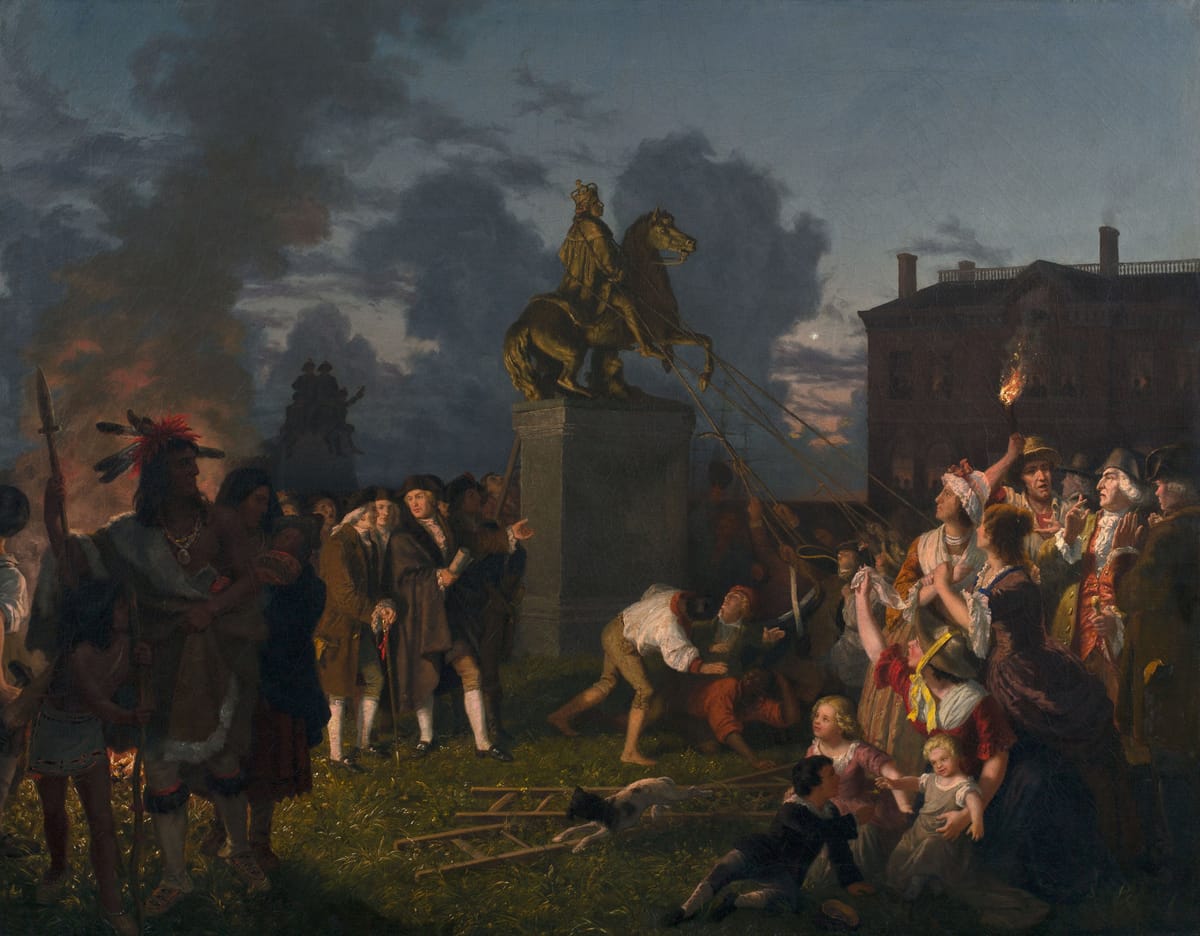
"Consider the 4,000-pound equestrian statue of King George III, bedecked in Roman imperial garb after the Emperor Marcus Aurelius, which stood for only six years in New York City's Bowling Green Park after it was erected in 1770. Unveiled to mark the British victory in the recent Seven Years' War, the statue looked out over the former Dutch cattle ground, circumscribed by a wrought-iron fence that still survives."
"On July 9, 1776, following a public reading of the recently signed Declaration of Independence, a furious crowd of colonials gathered at Bowling Green Park, toppling the statue with ropes and dismembering it with hammers and axes. Captain John Montresor, a British officer witness to the desecration, mournfully records how the statue was decapitated and the head put on a pike at Moore's Tavern,"
Contemporary anti-monarchical movements such as No Kings respond to authoritarian ambitions by combining political resistance with aesthetic subversion. Historical iconoclasm and revolutionary art repeatedly targeted monarchical symbols to erode authority and rally popular support. The 1770 equestrian statue of King George III in New York exemplifies how a gilded imperial monument became a focal point for collective desecration and symbolic reversal after independence declarations. Colonists toppled, dismembered, and publicly humiliated the figure, transforming its meaning. Aesthetic tactics—statue-toppling, satirical portrayals, and visual reappropriation—serve tactical and communicative roles in confronting tyranny and imagining alternative political orders.
Read at Hyperallergic
Unable to calculate read time
Collection
[
|
...
]