"We're in a race against resistance."
"The biggest challenge for us is getting these antibiotics into preclinical and then ultimately clinical development, and FDA approved. I think you'll hear this across AI for drug discovery-there is an impatience to make sure that these AI models are actually working and that patients actually start seeing those results,"
"So our team is laser focused on not just building the best model for its own sake, but really ensuring that we are truly accelerating timelines to get these drugs developed, that these drugs are more novel, less toxic, and more efficacious than what currently exists."
"If we don't have a solution, America's presence in space will stop."
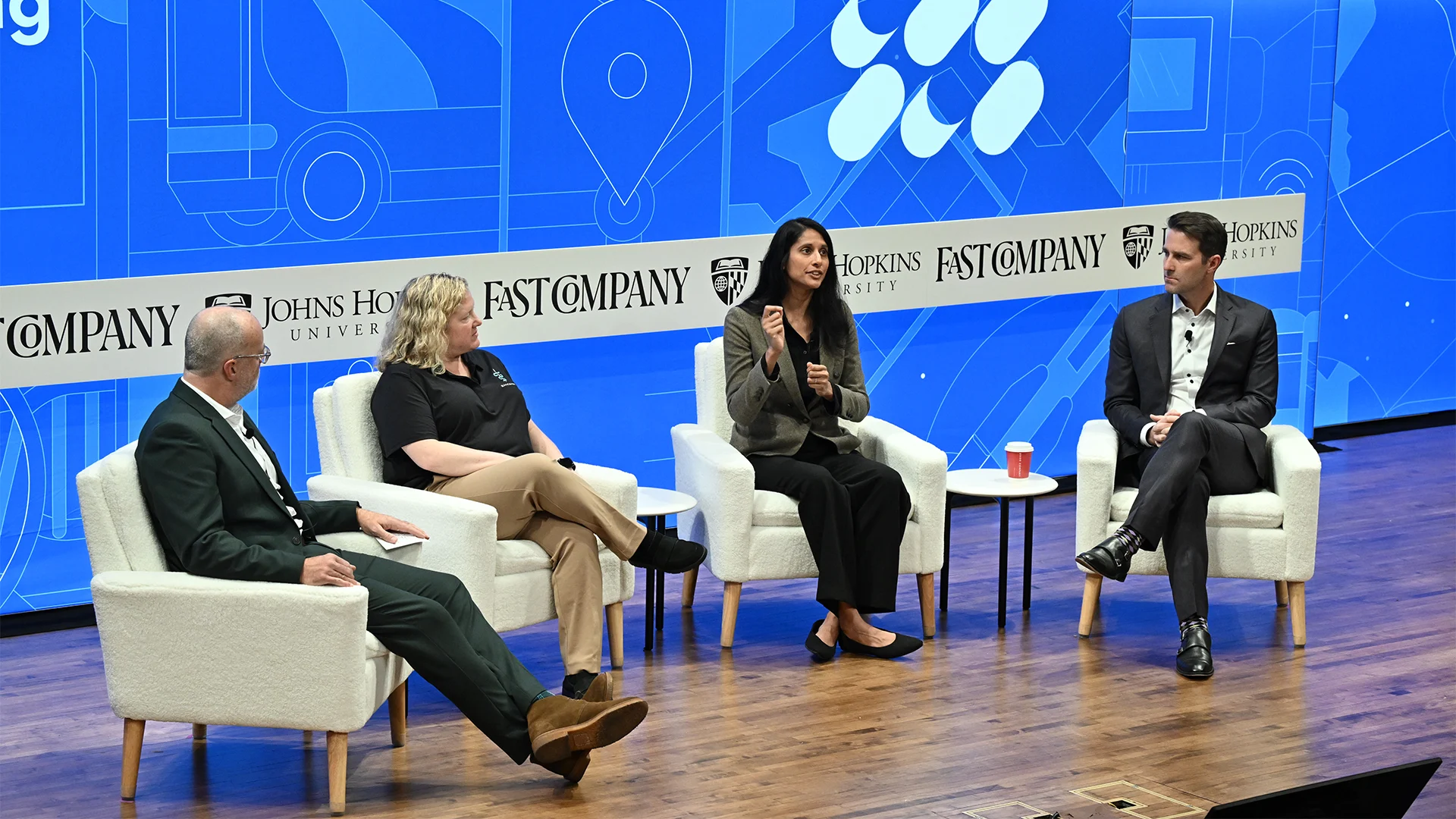
The World Changing Ideas Summit in Washington, DC convened leaders across business and academia focused on innovations in space, healthcare, and AI. Akhila Kosaraju's company, Pharebio, uses predictive and generative AI to accelerate antibiotic discovery and aims to develop 15 new antibiotics by 2030 targeting pathogens like E. coli and C. diff. Bacterial resistance can emerge in fewer than six years while drug development often takes about 13 years. Pharebio's principal challenge is advancing candidates into preclinical, clinical, and FDA approval stages. The team prioritizes models that shorten timelines and produce more novel, less toxic, and more efficacious drugs. Saleem Miyan emphasizes that American innovation and security depend on sustaining a presence in space.
Read at Fast Company
Unable to calculate read time
Collection
[
|
...
]