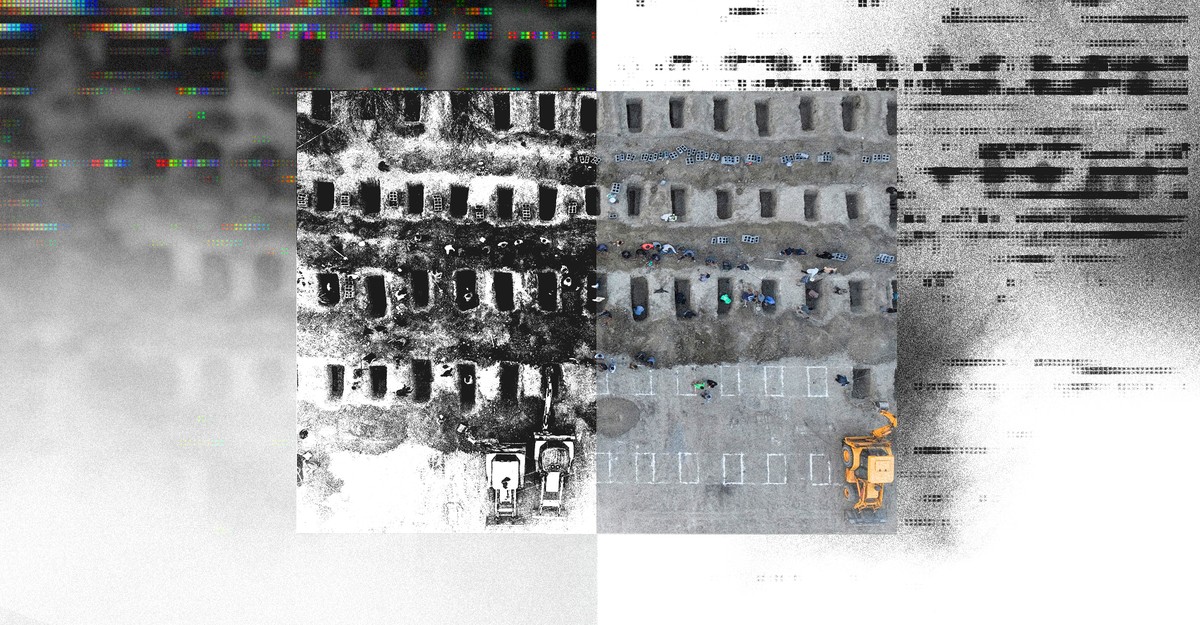
"The day before the strikes began, an AI image on social media planted the notion that the regime hides military equipment in schools. The next day, a real school—once part of a military compound but walled off from it since 2016, according to Human Rights Watch—was destroyed. The fake was wrong about Karimian, but by the time the Minab strike happened, audiences were primed to believe that a school was a legitimate military target, not the site of a civilian catastrophe."
"The image carried a visible Google Gemini watermark, indicating that it had been created by the software. The school posted a rebuttal, noting that the equipment could not physically fit on the premises. Iranian-diaspora fact-checkers confirmed that the image was fabricated."
"A New York Times investigation verified that the school had been hit by a precision strike at the same time as attacks on an adjacent naval base, and a preliminary investigation by the American military concluded that U.S. forces were most likely responsible. The school sat on the grounds of the Iranian navy's Asef Brigade barracks, an active military base."
On February 27, an AI-generated image showing military equipment at Karimian Elementary School in Isfahan, Iran circulated on social media with a Google Gemini watermark. The school and fact-checkers confirmed the image was fabricated. The following day, Shajareh Tayyebeh girls' elementary school in Minab was struck in airstrikes, killing at least 175 people including children. The school occupied grounds of an Iranian navy barracks but had been converted to civilian use since 2016. The timing created a narrative where audiences, primed by the false AI image suggesting schools housed military equipment, were conditioned to view the real school strike as a legitimate military target rather than a civilian catastrophe.
#ai-generated-misinformation #civilian-casualties #military-strikes #social-media-manipulation #fact-checking
Read at The Atlantic
Unable to calculate read time
Collection
[
|
...
]