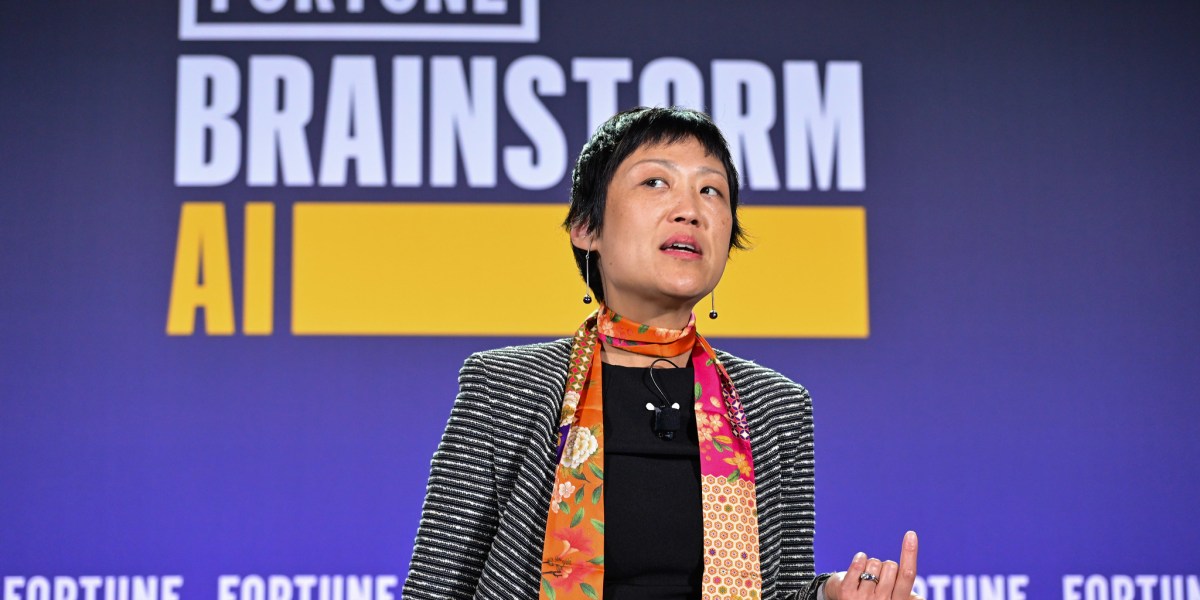
"They suffer from anxiety about aggressive drivers, get bewildered by exotic pets, and even experience a form of culture shock when moving from the West Coast to the East Coast. According to a recent presentation by an autonomous delivery executive, the artificial intelligence powering today's sidewalk robots is navigating a set of struggles that feels startlingly human. While the public often imagines autonomous robots as cold, calculating machines, the reality of deploying them in public spaces reveals a technology deeply concerned with social acceptance and survival. MJ Burk Chun, the co-founder and vice president of product design for Serve Robotics, addressed the Fortune Brainstorm AI conference with the argument that robots are just like us."
"The trouble often begins when the machines leave the controlled environment of a simulation and enter the "wild" of city sidewalks, Burk Chun said. During a deployment in Los Angeles, the delivery team found that the real world was "even more dynamic than we expected." In one specific instance, a robot froze, "thoroughly confused about the pet baby goat" standing in its path. While the robot's sensors could identify a human pedestrian, the goat represented a "long tail problem"-a statistical outlier that standard training data had not prepared the AI to encounter. Like a person seeing something inexplicable on their morning commute, the robot simply didn't know what to make of it."
""Robots have nightmares about cars," the executive said without elaborating on how she can tell when a robot is having nightmares, or what those might be like."
Autonomous sidewalk delivery robots exhibit anxiety about aggressive drivers, bewilderment at exotic pets, and culture shock when relocated between regions. Deploying the robots outside simulations exposes shortcomings in training data and behavior when faced with unpredictable urban conditions. Rare or unusual objects, such as a baby goat, act as "long tail" outliers that can cause robots to freeze or misclassify obstacles. Dynamic intersections and fast-moving vehicles create acute safety concerns and behaviors described as fear. Addressing these issues requires improved edge-case handling, richer training datasets, and designs that prioritize safe interaction with pedestrians and traffic.
Read at Fortune
Unable to calculate read time
Collection
[
|
...
]