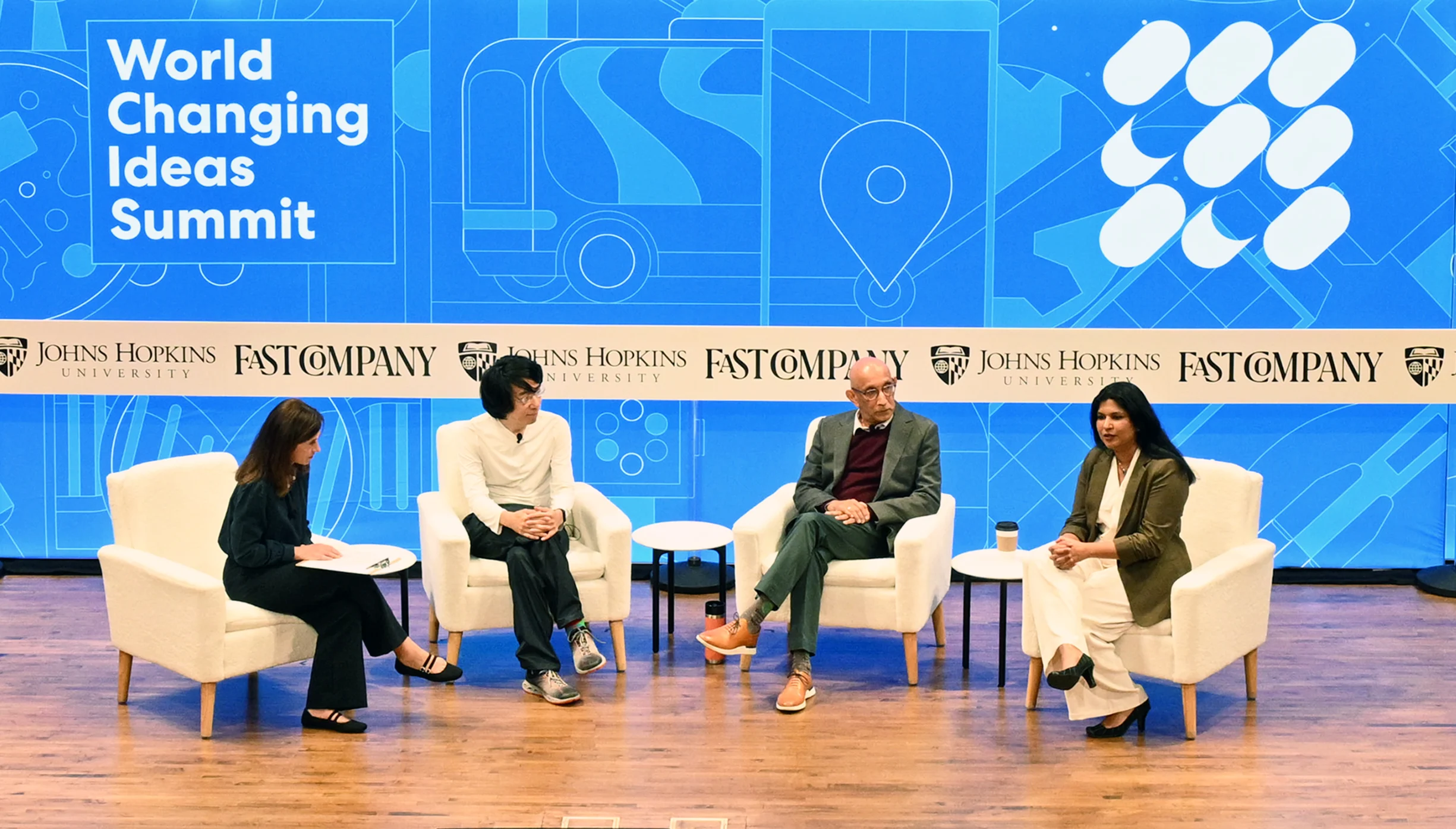
"Humans are likewise crucial for Cephla, which is deploying AI-powered microscopes in life science research, drug discovery, and diagnostics, said Hongquan Li, cofounder and CEO of the biotech company. Starting with malaria detection, humans are collecting data for training, annotating images, and providing input on relevant clinical metrics, he said. "When those machines are deployed, humans operate those microscopes and interact with patients and make the critical clinical decisions," Li said."
"And humans play a critical role at Waymo, which is "arguably the most mature manifestation of AI in the physical world today," said Smitha Shyam, the self-driving car company's senior director of engineering. AI systems for the physical world must be built to act safely, given the likelihood of chaos or uncertainty, which is why Waymo relies on human safety operators before expanding its fleet of fully autonomous vehicles to new markets, she added."
Humans will increasingly work alongside AI tools that learn from human expertise across domains such as autonomous vehicles, medical microscopy, and materials design. A balance between automation and human judgment is necessary: machines can perform tasks and generate results, but humans determine research questions, annotate training data, and provide clinical and operational decisions. In diagnostics, humans collect and label data, operate AI-powered microscopes, interact with patients, and make critical clinical calls. In autonomous mobility, human safety operators oversee systems and constrain expansion into new markets to ensure safe behavior amid uncertainty.
#human-ai-collaboration #autonomous-vehicles #medical-diagnostics #ai-powered-microscopy #safety-and-oversight
Read at Fast Company
Unable to calculate read time
Collection
[
|
...
]