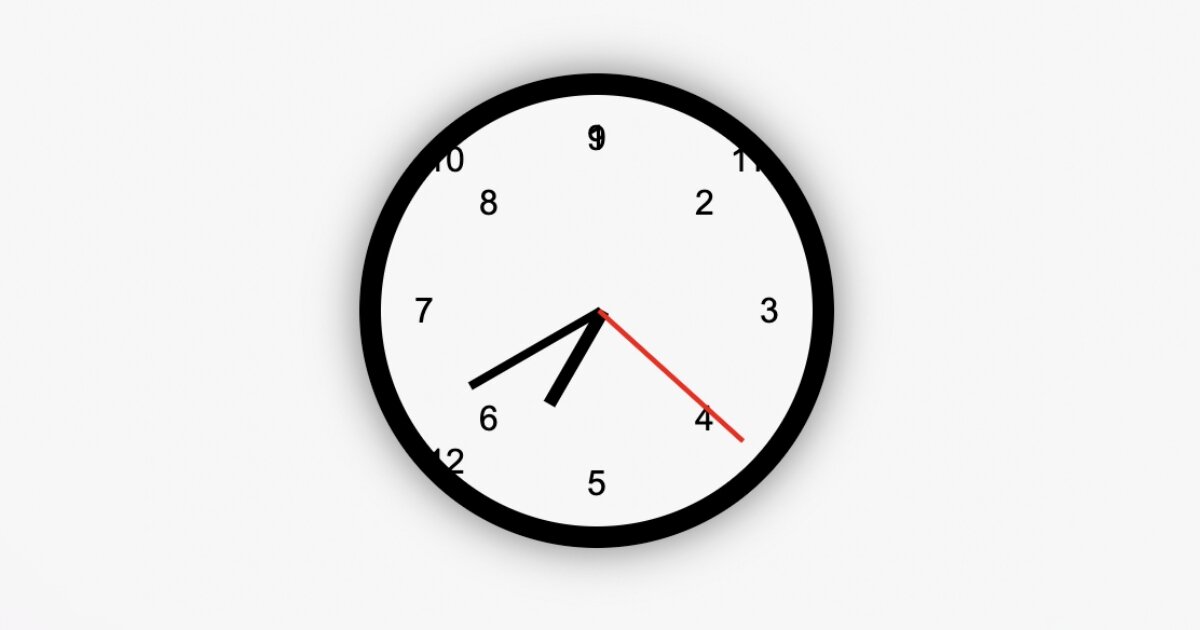
"Artificial intelligence can fulfill several requests except generating and drawing the correct analog clocks to tell time. It seems strange since clocks are everywhere, and they look simple to produce even digitally. AI systems have also seen millions of clock pictures and read lots of explanations about how clocks work using their own language models, but still, when scientists test AI to produce images and working correct analog clocks, the results are poor."
"In many tests, AI gets the correct time less than one out of four times. Based on the studies, a common mistake when scientists use AI to generate the correct analog clocks is mixing up the hour hand and the minute hand. Sometimes the system imagines hands that are not really there, hence creating awry-looking and displaced hands. They also tend to show the time as 10:10,"
AI frequently fails to produce or interpret correct analog clocks, with accuracy often below 25 percent in tests. Common errors include swapping hour and minute hands, inventing hands that do not exist, misplacing numbers, and defaulting to 10:10 due to training images. The systems learn from large image and language datasets and match familiar visual patterns rather than grasping rotation, angles, gear mechanics, or the physical concept of time. Language-based training reinforces textual associations like 'minute hand points to 12' without geometric reasoning. These limitations lead to visually plausible but temporally incorrect clock images.
Read at designboom | architecture & design magazine
Unable to calculate read time
Collection
[
|
...
]