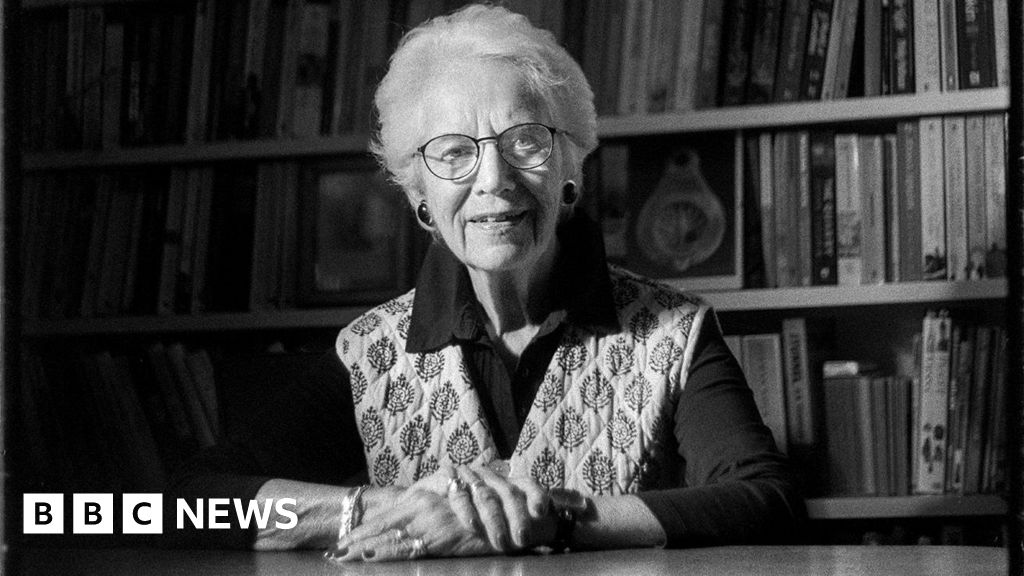
A London exhibition examines how Nazi forced labour became central to the German war economy from 1939 to 1945. Around 20 million people were exploited during World War II. The exhibition traces forced labour beyond concentration camps into factories, farms, and major German companies, using eyewitness testimony, photographs, and war crimes trial documents. A survivor’s family story describes deportation to the Theresienstadt ghetto in 1941, forced signing of a document using the term “euthanasia” for a baby after birth, and survival through Auschwitz while pregnant. The mother was later forced to work in an armaments factory in Freiburg producing parts for V1 flying bombs. As Allied forces advanced, prisoners were evacuated in open coal wagons to Mauthausen, where a child was born on 29 April 1945, followed by liberation by American forces.
"A new exhibition in London is shedding light on the vast scale of the Nazi regime's slave labour programme. Nazi Slave Labour: Perpetrators & Victims opened at The Wiener Holocaust Library and examines how forced labour became central to the German war economy between 1939 and 1945. It is estimated that 20 million people were exploited during the course of World War II."
"Drawing on eyewitness testimony, photographs and war crimes trial documents from the library's archives, the exhibition explores how the Nazi labour system extended far beyond concentration camps into factories, farms and major German companies. Organisers say around two and a half million sl"
"After her mother became pregnant in 1943, her parents were forced to sign a document stating the baby would be killed after birth. "But they didn't use the word kill," she said. "They used the word euthanasia. My mother had never heard the word euthanasia." After surviving Auschwitz while pregnant with Eva, Anka was transferred to Freiburg in Germany, where she was forced to work in an armaments factory manufacturing parts for V1 flying bombs."
"As Allied forces advanced in 1945, prisoners were evacuated in open coal wagons to Mauthausen concentration camp in Austria, where Eva was born on 29 April. "There are three reasons why we survived," she said. "The first is a very chilling one. On the 28th of April 1945, the Nazis had run out of gas. Well, my birthday is the 29th." Eva and her mother were eventually among those liberated by American forces."
Read at www.bbc.com
Unable to calculate read time
Collection
[
|
...
]