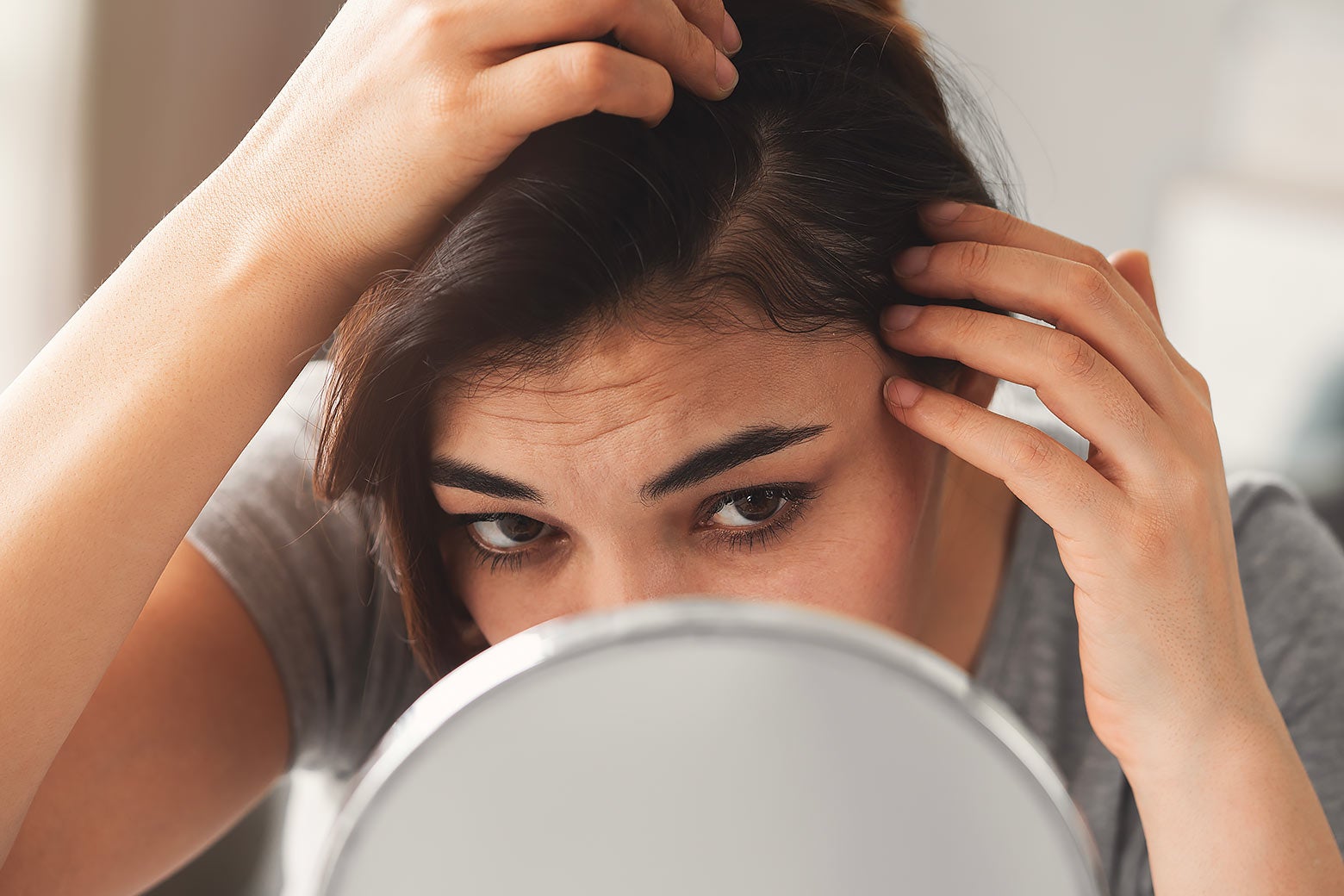
Hair thinning began in high school, with attempts to conceal a thinning hairline and avoid awkward posing. A dermatologist at age 16 recommended a $40 supplement, which was difficult to take and was discontinued. In college, protein intake was questioned and hair loss was repeatedly raised to dermatologists without helpful outcomes. At age 24, irregular blood test results led to further evaluation, ruling out more serious autoimmune conditions. A scalp biopsy then diagnosed fibrosing alopecia in a pattern distribution, where inflammation damages hair follicles through scarring, making the damage permanent. Hair loss is not a diagnosis, so treatment must target the specific cause using dermatologists’ guidance rather than generic or advertised products. No single treatment exists for FAPD, and managing it involves navigating what helps, what can be tolerated, what is affordable, and how to cope with visible differences.
"My hair woes started in high school, when I would scrape my curls into a bun and lament how thin my hairline looked. While the popular girls strutted through the halls with their effortless Pinterest-inspired updos, I was applying brown eyeshadow to my scalp to disguise the sparse spots. At night, I dreamed about not needing to tilt my head just so when posing for pictures."
"The damage is permanent: Once scarring occurs, hair can't grow in that spot again. While the term "hair loss" is colloquially used for many conditions, "hair loss" itself is not a diagnosis. If you notice changes in your hair, you need to treat its specific cause with tailored treatments and dermatologists' advice, as opposed to drugstore hair-loss products-or the latest thing being advertised to you on Instagram-that may or may not address the cause of your condition."
"In college, my hair continued to thin. My mom interrogated me about my protein intake (sorry, RFK Jr.-she beat you to it) and pushed me to mention the hair loss to dermatologists. The conversations never went anywhere helpful. Then, when I was 24, a blood test came back irregular. After ruling out more serious autoimmune conditions, my new dermatologist did a scalp biopsy and finally diagnosed me with fibrosing alopecia in a pattern distribution, or FAPD, in which inflammation damages hair follicles via scarring."
"Still, there is no single treatment for FAPD. Like many people with hair loss, I have found myself on a confusing journey of figuring out what kind of helps, what I can tolerate, what I can afford, and how to accept the distance between what my hair is and what I"
#hair-loss #fibrosing-alopecia-in-a-pattern-distribution-fapd #dermatology #scarring-alopecia #diagnosis-and-treatment
Read at Slate Magazine
Unable to calculate read time
Collection
[
|
...
]