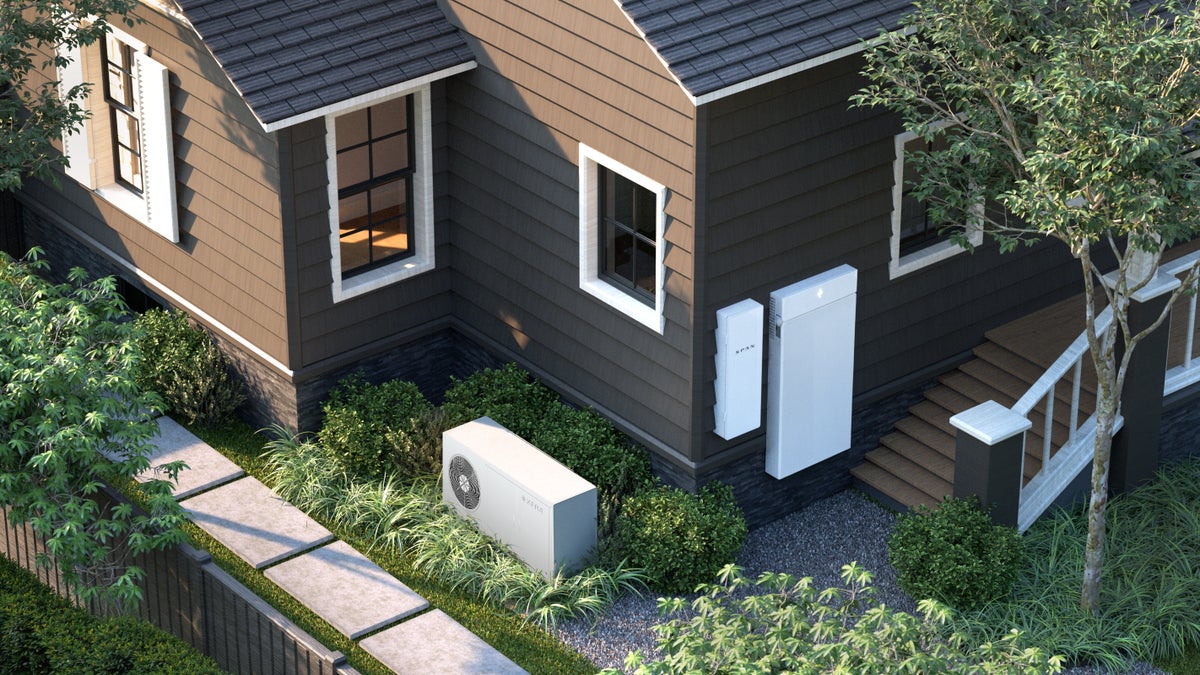
A distributed network of miniature AI computing units, called XFRA, is proposed for installation in side yards. Units draw electricity from a home’s supply and can earn discounted electricity and Internet in return. The system is built by Span, which already sells hardware for managing home electrical loads, in partnership with Nvidia. The approach targets constraints in AI power availability, where utilities struggle to connect power-hungry data centers quickly. Substation upgrades for large data centers can take years, and large amounts of generation and storage capacity remain queued. XFRA aims to bypass these bottlenecks by spreading compute across thousands of homes already connected to the grid, though its real impact on the AI power crunch and the residential grid remains uncertain.
"A unit about the size of an air conditioner, mounted in the side yard, could soon be humming away on artificial intelligence tasks, drawing power from your home's energy supply and earning you discounted electricity and Internet in exchange. That's the pitch for XFRA, a distributed network of miniature AI computing units that was recently unveiled by smart-electrical-panel start-up Span in partnership with Nvidia."
"Span, which started in San Francisco in 2018, already sells hardware to help homes manage electrical loads, and the new technology applies the same basic control system to powering AI compute. It arrives just as access to electricity has become one of the AI industry's biggest constraints, with utilities unable to connect power-hungry data centers to the grid fast enough."
"Substation upgrades to support a 100-megawatt data center now take four to seven years in most parts of the U.S., and more than 2,060 gigawatts of generation and storage capacity sat in interconnection queues as of late 2025, according to Lawrence Berkeley National Laboratory. Span's system is designed to route around this problem: instead of building a single large data center that requires its own substation upgrade or on-site gas turbines, it spreads compute across thousands of homes that are already connected to the grid."
"Whether the approach can meaningfully alleviate the AI power crunch and what it might do to the residential grid in the process remains unclear. They say it's about speed to market for data center equipment, and it's true there are bottlenecks to building large facilities nowadays, says Jonathan Koomey, a longtime data center energy researcher, who was formerly at Berkeley Lab."
#distributed-ai-computing #home-energy-management #grid-constraints #data-center-power-infrastructure #nvidia-partnership
Read at www.scientificamerican.com
Unable to calculate read time
Collection
[
|
...
]