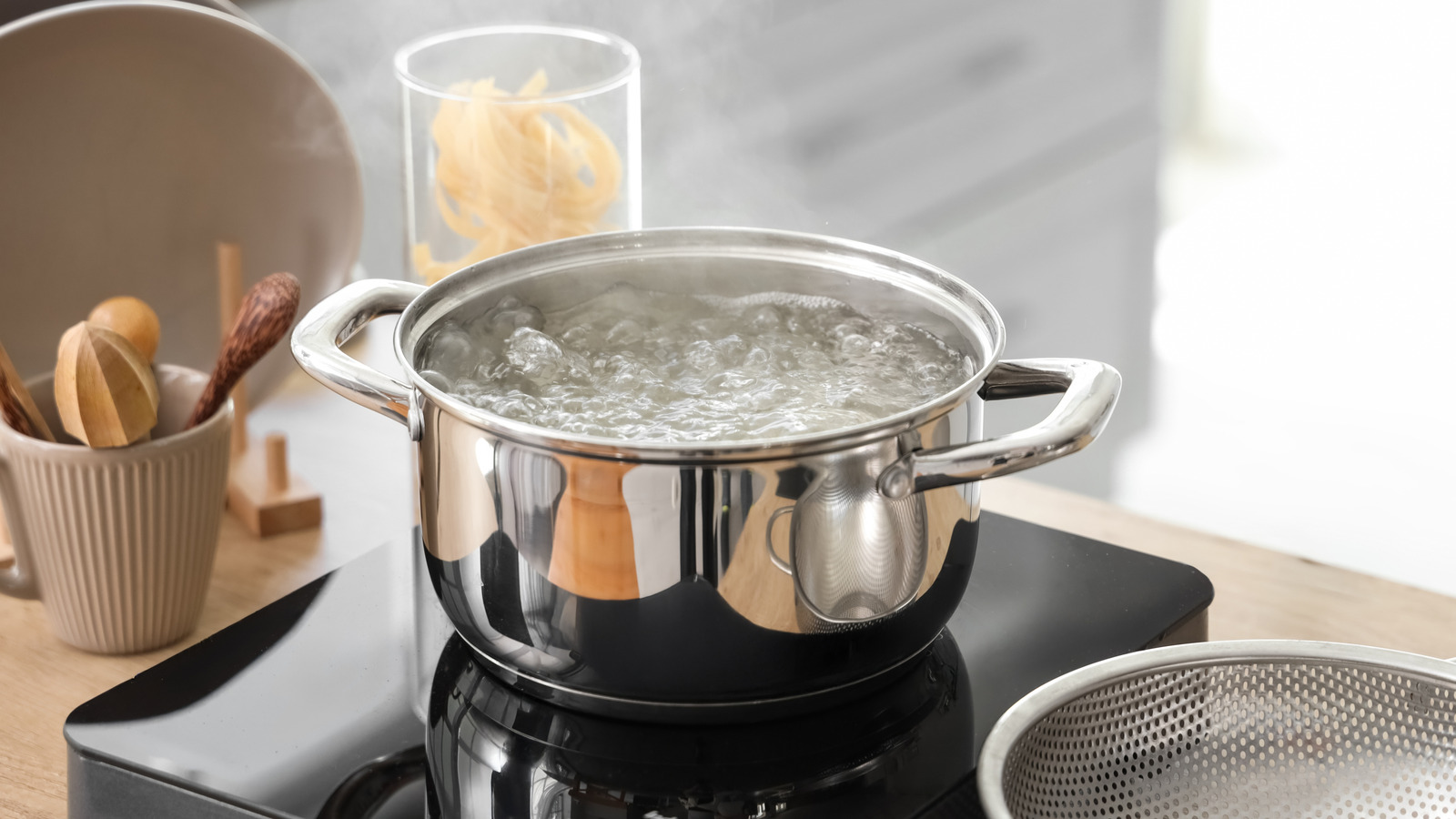
Wood contains cellulose fibers that attract water molecules. When a wooden spoon rests over boiling water, the fibers interact with the foam below, stretching and popping larger, starchy bubbles. Wood also conducts heat poorly, helping the spoon stay cool enough to touch while it disrupts the foam. The spoon can divert steam outward and create more space for bubbles to move, helping keep the water at a manageable level. The method depends on proper conditions: the spoon must be clean and dry, placed evenly across the pot, and used before boiling becomes excessive. It may fail with overfilled pots or liquids with lots of sugar, and different woods perform at different rates.
"The spoon also needs to be clean and dry and sit across the pot evenly to work most effectively. There's also only so much a spoon can do -- nothing can be done about a pot that's far too full, and this method won't work if there's a lot of sugar in the liquid. Finally, you should place the spoon on the pot before the water starts to boil too much."
Read at Tasting Table
Unable to calculate read time
Collection
[
|
...
]