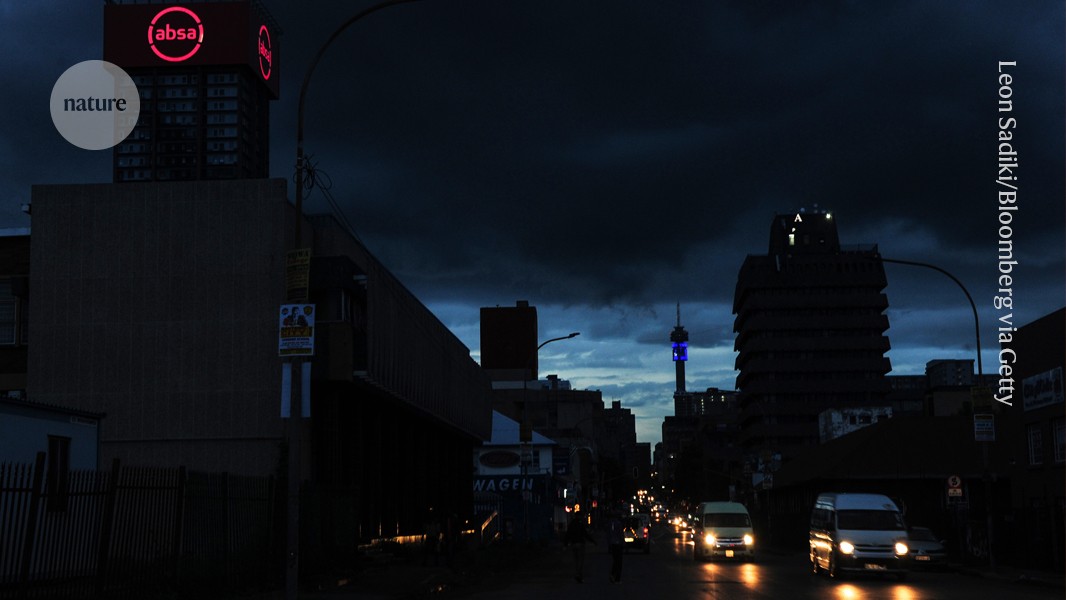
A scheduled blackout in Makhanda leaves the National Research Foundation’s South African Institute for Aquatic Biodiversity without power. More than one million specimens are stored in 70% ethanol inside thousands of glass jars on mobile shelving. The ethanol must be kept near 18°C, because higher temperatures make it a severe fire hazard. Summers can exceed 30°C, so active cooling is essential to prevent the archive from becoming a fuel source. Lights go out, air conditioning stops briefly, and backup generators start slowly. Load-shedding peaked in 2023, with power cuts occurring on most days. Eskom’s aging coal plants and municipal wiring theft destabilize the grid, forcing institutions to adapt to both planned and unplanned outages.
"Inside thousands of glass jars on kilometres of mobile shelving, more than one million specimens sit vulnerable. Most of the institute's collection of fish, amphibians and cephalopods, comprising lineages shaped by 400 million years of evolution, float in 70% ethanol at temperatures around 18 C. If temperatures rise even a few degrees past this threshold, the preservative becomes a severe fire hazard. Given that summers in the region can exceed 30 C, active cooling is essential to prevent the archive from turning into a giant fuel tank."
"The lights blink out, plunging the rooms into darkness. For a minute, the crucial air conditioning falls silent, before backup generators slowly rattle to life. The collection, the largest of its kind in Africa and home to rare specimens of coelacanths, a group of fish that were once thought extinct, sits on a knife-edge between preservation and ruination."
"These planned blackouts, known as load-shedding, reached their peak in South Africa in 2023, with power cuts occurring on nine in every ten days. As the state utility, Eskom, continues to struggle to meet demand with its ageing coal power plants, electricity is rationed to local distributors through a rotating schedule to prevent grid collapse. In Makhanda, the grid is further destabilized by frequent theft of municipal wiring, forcing institutions such as the NRF-SAIAB to adapt to both scheduled and unscheduled losses."
Read at www.nature.com
Unable to calculate read time
Collection
[
|
...
]