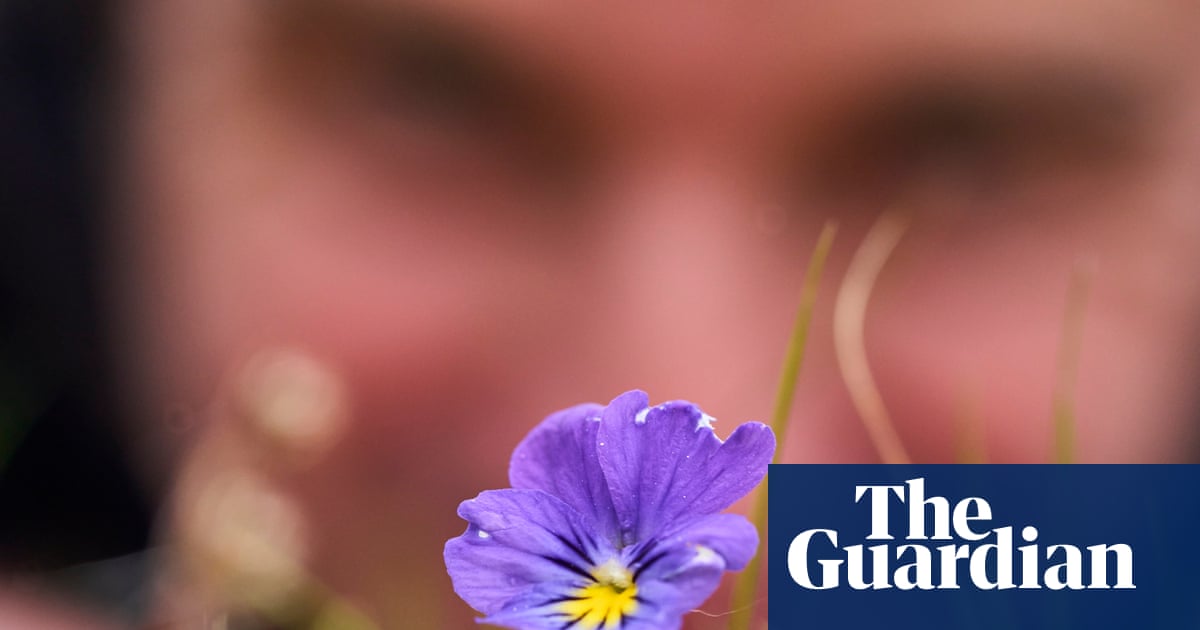
Small purple mountain pansies and white alpine pennycress appear in a rare pocket of calaminarian grassland along the River Allen in Northumberland. The habitat exists on soils contaminated by heavy metals, a legacy of more than 1,000 years of lead mining. Specialist metallophyte plants adapted to these conditions, including Viola calaminaria, a yellow violet named after calamine, the old term for zinc ore. About 30% of Europe’s calaminarian grasslands are in the UK, but they cover only around 450 hectares. The grasslands originally formed near rocky upland outcrops where lead, cadmium, and zinc were exposed. As mining progressed, lichens and mosses developed, and later debate emerged about whether these human-made meadows should be protected as they become overgrown and the metals become buried under humus.
"This is a pocket of calaminarian grassland, an increasingly rare habitat where specialist plants called metallophytes have adapted to live in soils deeply contaminated by heavy metals, the legacy of more than 1,000 years of lead mining. This is nature responding to pollution caused by humans Geoff Dobbins This is absolutely a case of nature responding to pollution caused by humans, says Geoff Dobbins, estates manager for the Northumberland Wildlife Trust, who is passionate about saving these grasslands."
"But as they become cloaked in more thuggish plants such as gorse and broom, and the zinc and lead brought by mine-wash became slowly buried beneath a blanket of humus, there is a growing debate about whether these human-made meadows should be protected or allowed to gently fade away. Purple mountain pansies at Briarwood Banks, a calaminarian grassland contaminated by heavy metals from the Pennine orefields."
"The grasslands are named after Viola calaminaria, a rare yellow violet found growing in the metal-rich soils of northern Europe, and itself named after calamine, the old term for zinc ore. About 30% of Europe's calaminarian grasslands are found in the UK, although they are scarce, covering just 450 hectares (1,100 acres), with pockets in northern England, mid-Wales and the Highlands of Scotland."
"The grasslands originally evolved in small patches around rocky upland outcrops, where veins of lead, cadmium and zinc had been exposed by the elements. As these began to be mined, according to Dr Ruth Starr-Keddle, a botanist at the North Pennines National Landscape, a biocrust of lichens and mosses developed that could tolerat"
#calaminarian-grassland #heavy-metal-contamination #metallophyte-plants #lead-mining-legacy #northumberland-ecology
Read at www.theguardian.com
Unable to calculate read time
Collection
[
|
...
]