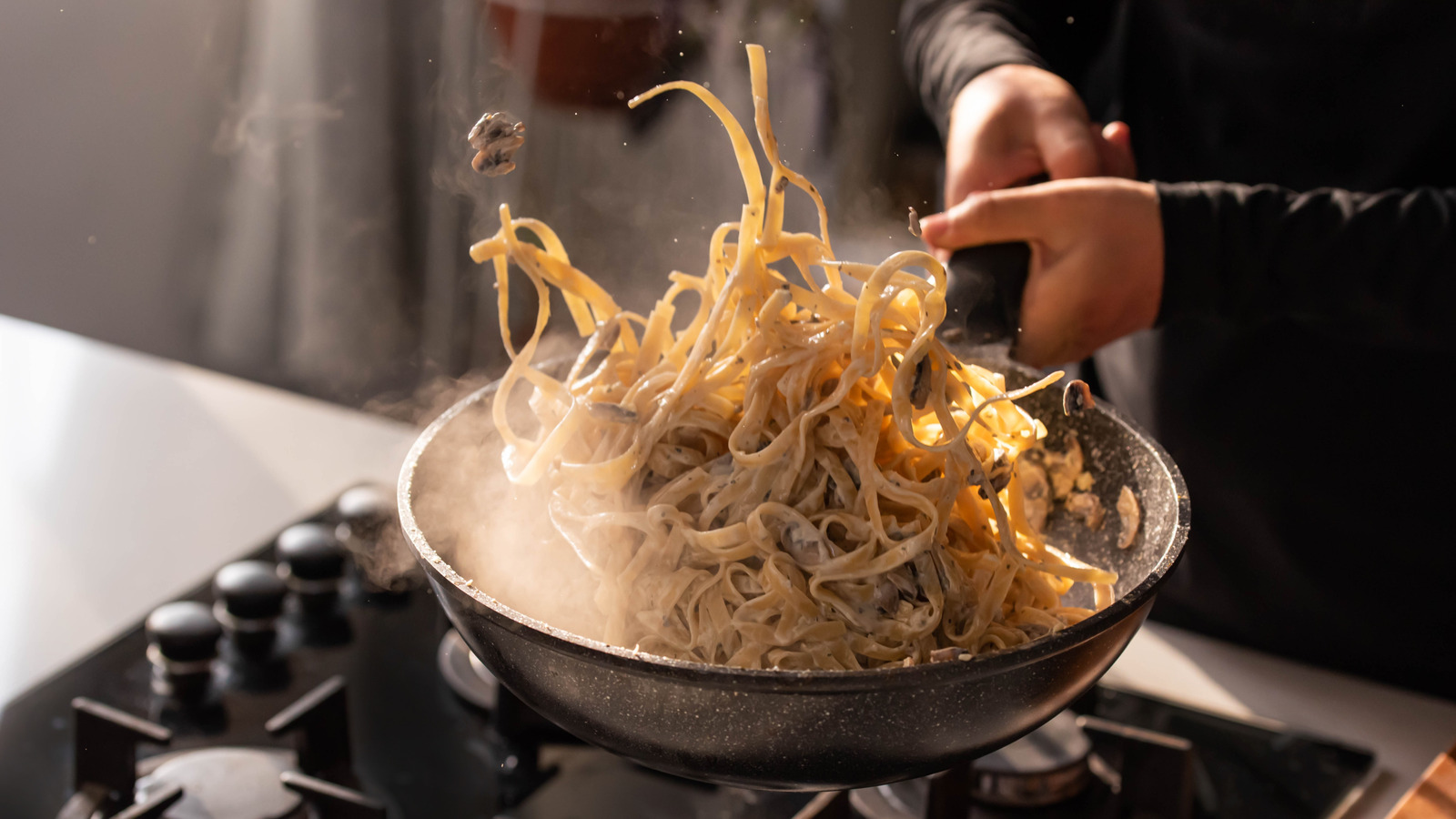
Sauciers and saucepans can look similar, but the saucier’s rounded shape supports finishing pasta directly in sauce. Gently sloped walls prevent sauces, cream, and starch from collecting in side corners, allowing tools like whisks and spoons to move smoothly across the cooking surface. This design also reduces sticking and burning, making cleanup easier. Finishing pasta in the sauce is recommended instead of dumping pasta over noodles. In professional kitchens, partially cooked pasta is transferred into sauce with starchy pasta water and tossed until the sauce emulsifies, a process suited to sauciers. Sauciers are especially effective for cooking one or two servings at a time.
"“I staged at Misi in Brooklyn when I was a culinary student, which is basically a pasta-only restaurant. And I remember they had four or five line cooks that would all be working on different pastas at a time, and each would have two of those pots going at once. And that’s where I’ve first seen that style of pot,” Hayden recalled of saucier pans. “I find that it works best when you’re working with one or two servings of pasta,” she advised."
"“The saucier’s gently sloped walls fundamentally change how pasta, sauces, and risotto behave during cooking. Because it doesn’t have any sharp angles, this solves a lot of pasta problems. No sauces, cream, or starch will collect in the sides or corners, and your whisks, wooden spoons, and spatulas will elegantly glide around the entire cooking surface. Plus, the cleanup is a lot easier, since nothing is stuck and burning to the side corners.”"
"“You should always finish pasta directly in the sauce rather than simply dumping it over the noodles. It’s why the restaurant saucepan deserves a spot on your stove, and why the old-school kitchen brigade system has a dedicated saucier chef. Chefs transfer partially cooked pasta into a pan with sauce and starchy pasta water, then toss it all together until the sauce emulsifies - exactly the kind of situation a saucier was made for.”"
Read at Tasting Table
Unable to calculate read time
Collection
[
|
...
]