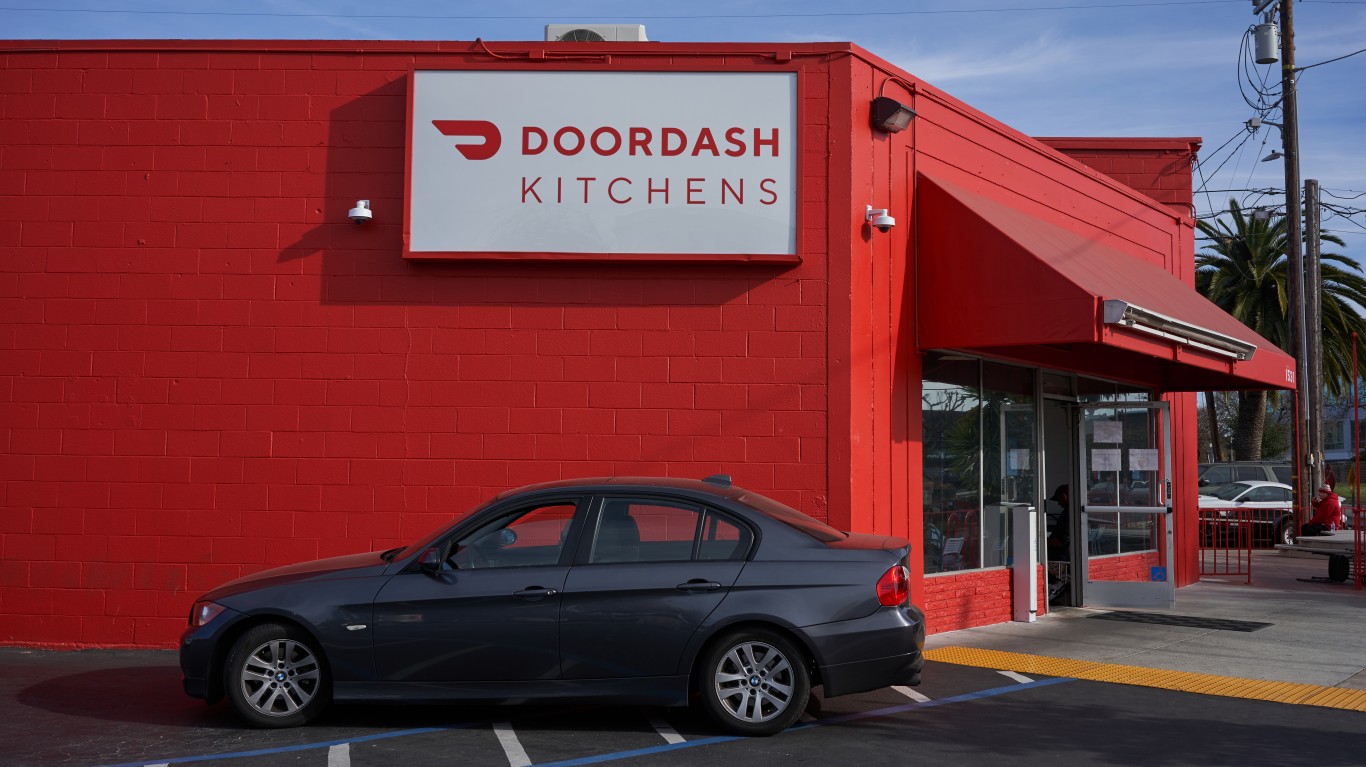
DoorDash and Amazon both carry delivery exposure, but their business structures differ. DoorDash operates as a local logistics provider for food, grocery, and retail orders fulfilled by gig workers. Amazon’s delivery network functions as part of a broader flywheel that includes cloud services, advertising, and Prime subscriptions. Amazon’s higher-margin segments subsidize delivery, supporting stronger overall economics. Amazon’s Q1 2026 results showed an EPS beat, revenue growth, fast AWS expansion, high operating margins, and rising advertising and Stores performance. DoorDash’s Q1 2026 revenue growth was strong, but GAAP net income declined and adjusted EBITDA margin fell as integration costs rose, grocery and retail unit economics lagged, and Dasher gas relief exceeded $50 million per quarter.
"DoorDash is a pure-play local logistics operator: food, grocery, and retail orders fulfilled by gig workers. Amazon's delivery network is a feature inside a flywheel that includes cloud, advertising, and Prime subscriptions. That structural difference is the divergence. Amazon's delivery is subsidized by higher-margin segments. DoorDash has no such cushion."
"Amazon's Q1 2026 report on April 29 delivered EPS of $2.78 versus a $1.73 estimate, a 61% beat. Revenue rose 17% to $181.52 billion. AWS revenue grew 28%, the fastest pace in 15 quarters, with operating margins of 38%. Amazon CEO Andy Jassy noted on the call, "Our custom silicon business is now one of the top three data center chip businesses in the world.""
"DoorDash's Q1 2026 report on May 6 looked strong on top-line numbers. Revenue rose 33% to $4.04 billion, with Marketplace Gross Order Value (GOV) up 37%. Yet, DoorDash's GAAP net income fell 5% year over year (YoY) to $184 million, and adjusted EBITDA margin (as a percent of GOV) compressed from 3% to 2%."
"That margin compression is the story. Deliveroo integration is expensive, U.S. grocery and retail unit economics aren't expected to turn positive until the second half of 2026, and Dasher gas relief is running over $50 million per quarter."
#delivery-logistics #business-model-flywheel #amazon-aws-and-advertising #doordash-margins #unit-economics
Read at 24/7 Wall St.
Unable to calculate read time
Collection
[
|
...
]