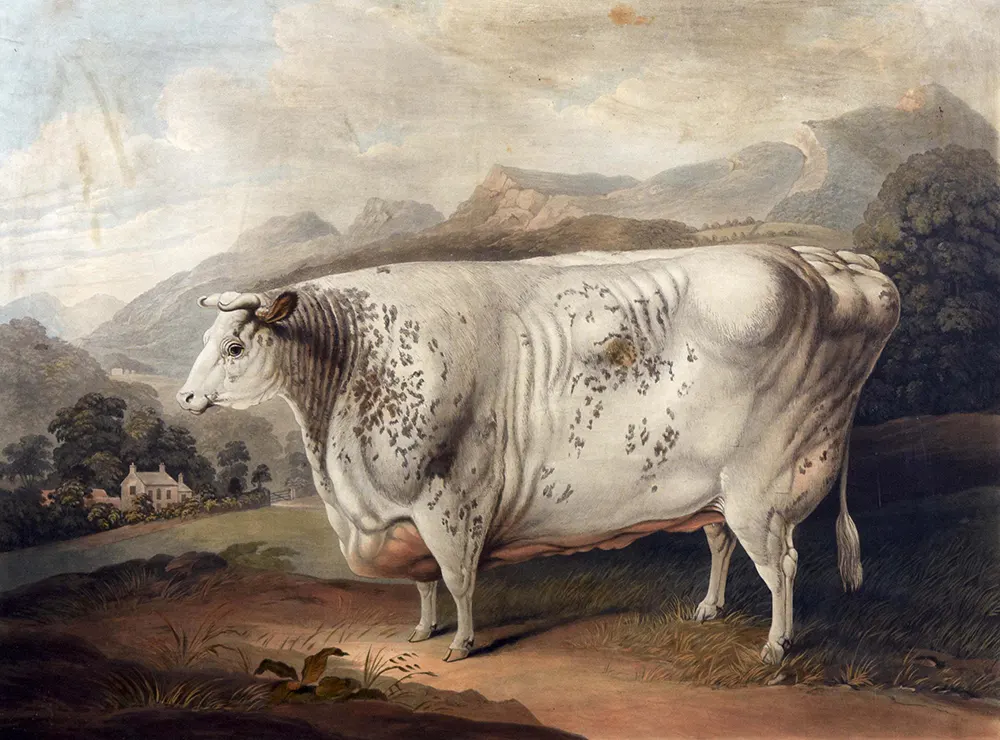
"In the 19th century, before modern photography and digital marketing, farmers turned to paintbrushes and canvases to display their finest livestock. But these weren't just ordinary portraits of pigs, cows, and sheep - they were grand, exaggerated, and sometimes almost comically oversized. During this time, agricultural fairs and livestock competitions became wildly popular across Britain and America. Winning these shows was a mark of pride, prestige, and financial success."
"Without photography, paintings were one of the only ways to advertise a farm's best animals. Whether hung in a farmhouse, displayed at a fair, or reproduced in newspapers and agricultural journals, these images served a marketing purpose. A massive, well-muscled bull on canvas promised strength and profitability, whether or not the real animal was quite that imposing. One of the most noticeable elements of these paintings is the exaggerated proportions. Cattle with barrel-sized bellies, sheep with impossibly fluffy coats, and pigs the size of bathtubs were not uncommon."
"Some artists even used special techniques-like lowering the horizon line-to make animals appear even more colossal. These stylistic flourishes helped communicate abundance and prosperity. Painters like Thomas Sidney Cooper and Edwin Henry Landseer gained reputations for their detailed, idealized portrayals of livestock. Though not all artists exaggerated equally, many understood the assignment: make the animal look like the ultimate specimen."
In the 19th century, farmers used painted portraits to showcase prize livestock when photography was unavailable. Agricultural fairs and livestock competitions created strong incentives for visible proof of superior animals, with winning exhibits signaling pride, prestige, and financial success. Farmers commissioned artists to portray animals not only for documentation but also as promotional tools that emphasized size and quality. Painters employed exaggeration—barrel-sized bellies, impossibly fluffy coats, and oversized pigs—and visual tricks like lowering the horizon line to magnify scale. These stylistic choices communicated abundance, prosperity, and competitive advantage. Renowned painters adopted idealized depictions to present animals as ultimate specimens for breeders and buyers.
Read at Animals Around The Globe
Unable to calculate read time
Collection
[
|
...
]