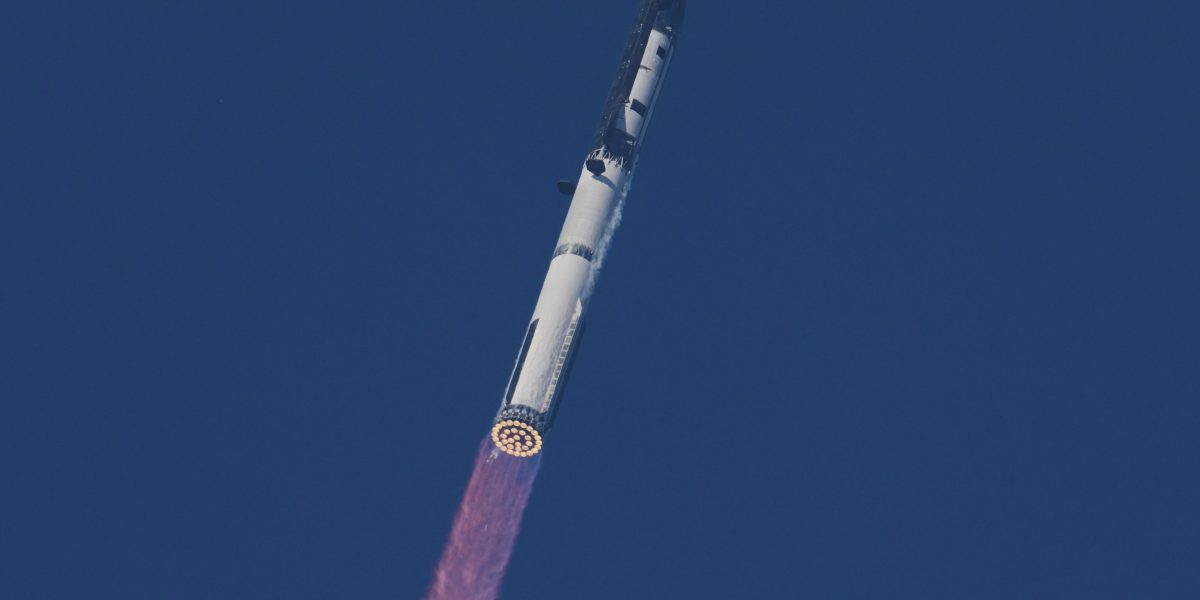
SpaceX launched its most powerful Starship yet on a test flight, using a redesigned third-generation Starship V3 from a new launch pad near Starbase in southern Texas. The flight released 20 mock Starlink satellites midway through an hourlong trajectory that traveled about halfway around the world. The spacecraft reached its final destination in the Indian Ocean despite some engine trouble. The vehicle then impacted and erupted in flames, which SpaceX said was expected. The launch attempt followed earlier delays caused by last-minute pad issues. Musk called the launch and landing “epic,” and NASA Administrator Jared Isaacman said Starship is one step closer to the moon for Artemis. This was the 12th test flight toward Mars goals.
"SpaceX launched its biggest, most powerful Starship yet on a test flight Friday, an upgraded version that NASA is counting on to land astronauts on the moon. The redesigned mega rocket made its debut two days after SpaceX CEO Elon Musk announced he's taking the company public. It blasted off from the southern tip of Texas, carrying 20 mock Starlink satellites that were released midway through the hourlong spaceflight that stretched halfway around the world."
"The spacecraft reached its final destination - the Indian Ocean - despite some engine trouble, before erupting in flames upon impact. That last part was not unexpected, according to SpaceX. Musk called it "an epic" launch and landing. "You scored a goal for humanity," he told his team via X."
"It's the 12th test flight of the rocket that Musk is building to get people to Mars one day. But first comes the moon and NASA's Artemis program. NASA Administrator Jared Isaacman flew in for the launch, saying Starship is now one step closer to the moon. The last of the old space-skimming Starships lifted off in October."
"While the liftoff itself went well, not all of the engines fired as the booster attempted a controlled return. The spacecraft also had to make do with fewer engines, but kept heading eastward 120 miles (194 kilometers) up. A pair of modified, camera-equipped Starlinks ejected from Starship provided brief views of the spacec"
Read at Fortune
Unable to calculate read time
Collection
[
|
...
]