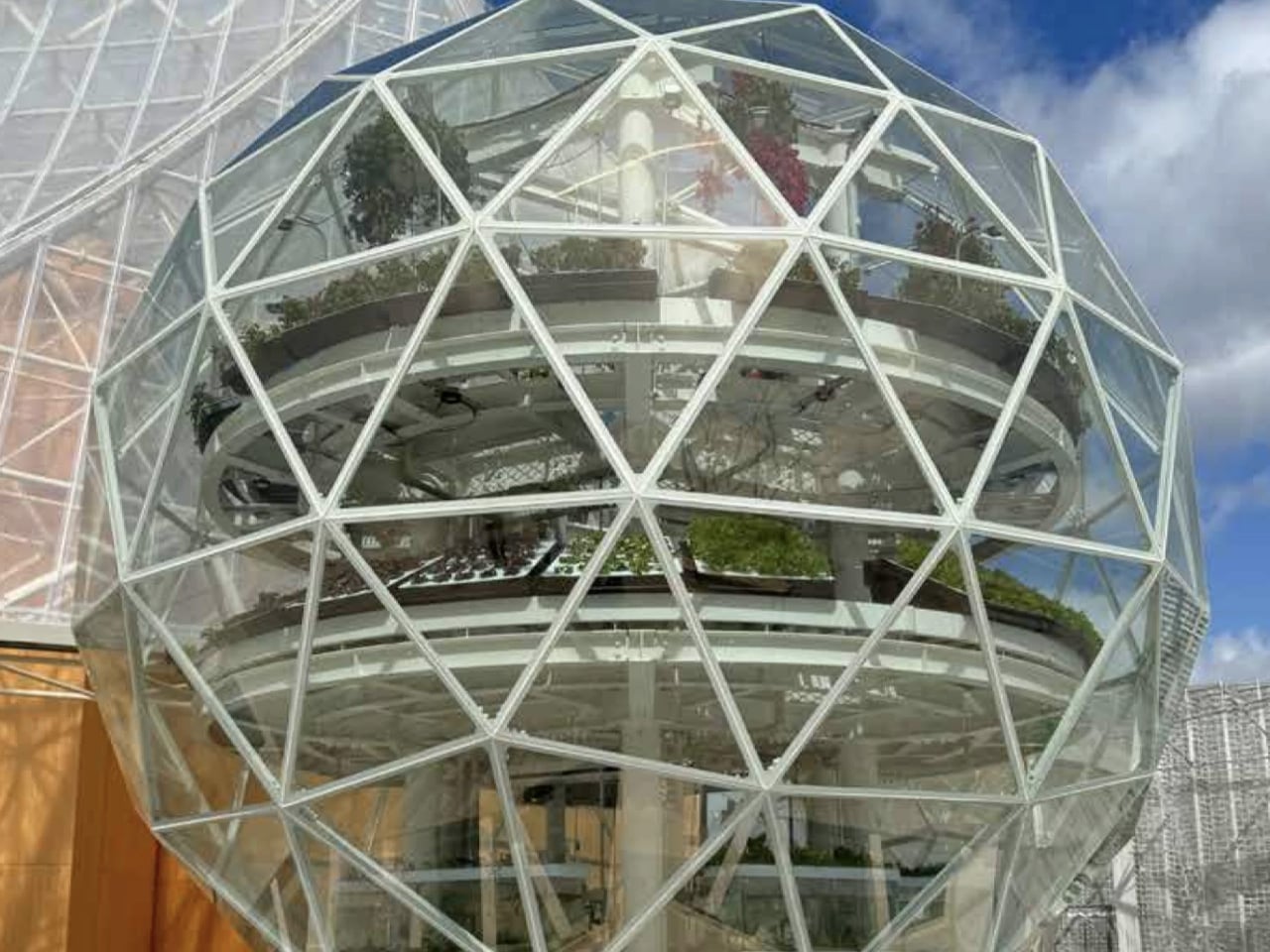
"Perched at the Osaka Health Pavilion during Expo 2025, a translucent dome hums with life. Inside, tomatoes ripen above brackish water while pufferfish swim below, their waste feeding the plants that clean their home. This is "Inochi no Izumi," or "Source of Life," a 21-foot-high sphere that reimagines how cities might feed themselves. The dome's genius lies in its vertical arrangement. Four water compartments form the base: seawater, brackish water, and two freshwater tanks."
"The nutrient cycle starts underwater. Fish excrete ammonia-rich waste that specialized microbes convert into nitrites, then nitrates. Pumps lift this nutrient-loaded water to feed the plants directly overhead. As roots absorb nitrogen compounds, they return purified water to the tanks below. Nothing leaves the system. Nature's wetland cycling becomes an engine for food production. The broader the range of compatible species, the more resilient and self-sufficient the ecosystem becomes. That diversity mirrors natural systems but remains optimized for human consumption."
The 21-foot-high translucent sphere stacks four salinity-tiered aquatic tanks with corresponding hydroponic crop tiers to create parallel ecosystems. Each tank houses species matched to its salinity, from marine groupers and red seabream in seawater to sturgeon in freshwater, while halophytes, sea asparagus, sea purslane, tomatoes, nutrient-dense herbs, lettuces, and edible flowers grow above. Fish waste supplies ammonia converted by microbes into nitrites and nitrates, and pumps deliver nutrient-rich water to plant roots; roots return purified water to the tanks, creating a closed-loop nutrient cycle. Motorized rotating beds and species diversity increase resilience and optimize yields. Designers include VikingDome, Osaka Metropolitan University Plant Factory R&D Center, and Tokyo University of Marine Science & Technology.
Read at Yanko Design - Modern Industrial Design News
Unable to calculate read time
Collection
[
|
...
]